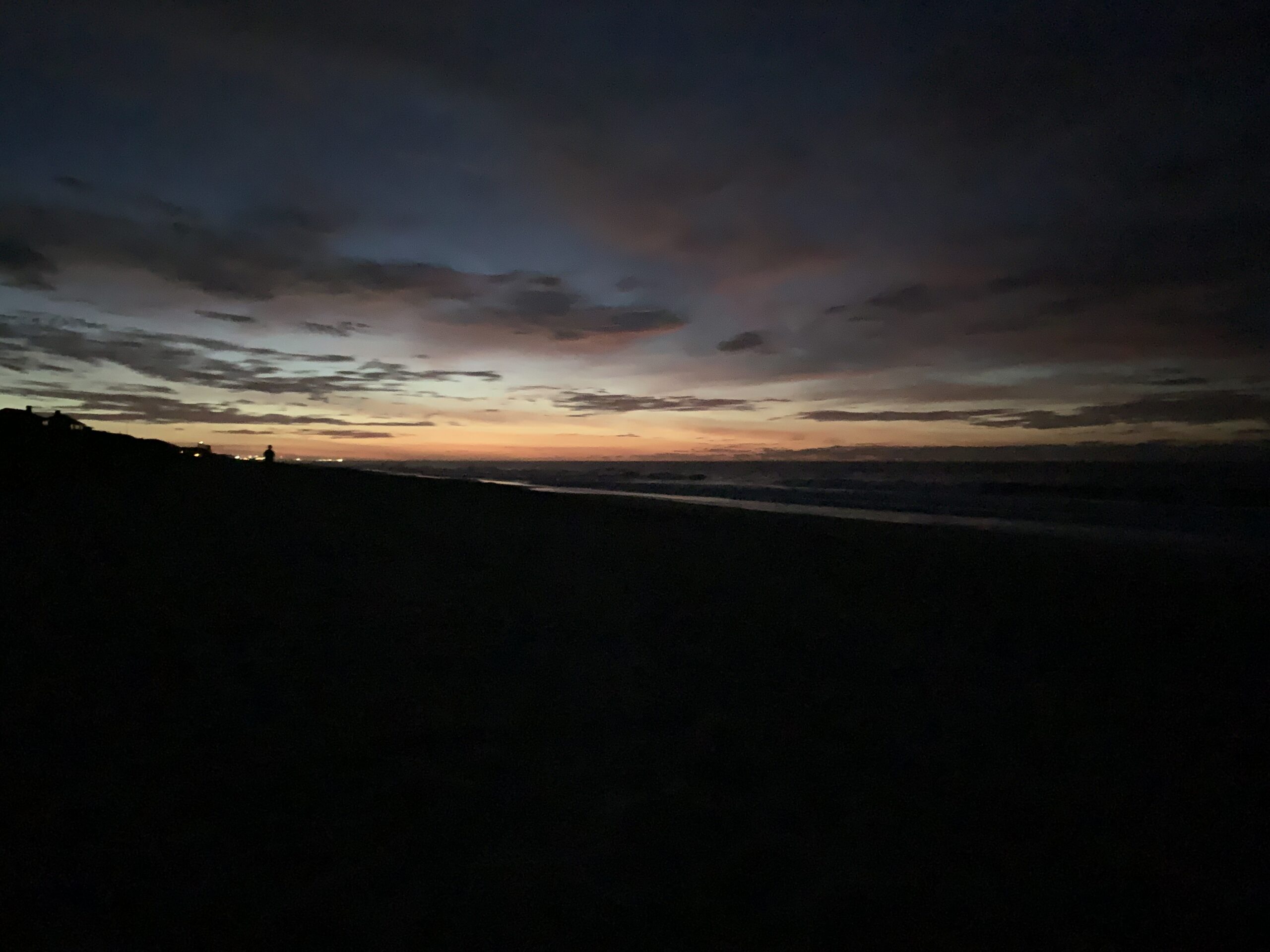
In the book The Black Bird Oracle by Deborah Harkness, Diana, a gifted witch named after the Roman Goddess of the Hunt, is at a crossroads. Will she walk the Dark Path – her destiny – or will she stay in the safe and comfortable life that she and her vampire husband Matthew have created with their twin children. While the Dark Path seems ominous and filled with treacherous and all too real risks, it also appears to be the path that leads to the greatest fulfillment of her gifts and power. In fact, after Diana uses Light, Shadow, and Dark – all three – to successfully navigate a harrowing challenge, this is what the Goddess says to her:
“Your purpose is to use your full power –
Light, Shadow, and Dark – in the service of others …
You have proven that you are suited to the Dark Path and its mysteries, daughter.”
Most of us, it seems, are quick to seek the Light and to avoid Shadow and especially Dark. Yet the message of this book rings true: we need Shadow and Dark as much as we need Light. Let me repeat that: We needShadow and Dark! Especially in times that are rife with the dangers of the Dark. Times like right now, where we are up to our necks in darkness, in this country and globally.
I don’t know about you, but me? I struggle daily to keep from spiraling into an abyss of despair. In the darkness of these times, I feel lost. I feel anxious. I feel thoroughly inadequate. I am not just afraid, but often terrified.
I am sure that I am even more than usual falling short in all the ways that matter. I am painfully aware of all the things that I cannot change. I cannot stop the climate crisis. I cannot douse the political dumpster fire scorching our cultural landscape. I cannot ease the terrible loss of the human-made and natural disasters that have traumatized so very many people. And I mostly have too little sense of what I maybe can change.
Oof.
Just saying that out loud to you – I feel it in my bones, the despair. Do you, too? Things are so very hard. We might feel the temptation to give in to the demons of the Dark. That’s definitely true for me. I am tempted – for instance – to hate and curse my enemies. Tempted also to disengage, tempted to turn away.
I cannot afford to cave in to hatred. I cannot afford to disengage. I cannot afford to cower in my safe little patches of light. I cannot afford to deny or dim the reality of what is happening. Maybe you feel like that is not something you can afford to do either.
So. That felt like a lot of heaviness. Let’s pause a moment to breathe together. To connect with ourselves. Get in touch with what you are feeling – emotionally and physically, and release it.
And now take a moment to connect with the Good within yourself and within each other. And breathe a bit more.
It is certainly important to feel what you feel as we travel this path that we’re on, especially all those difficult feelings. It can also be good to pause. And it can be good to notice the qualities of this particular dark that we are in.
Poet Theodore Roethke wrote:
“In a dark time the eye begins to see.”
Let’s take a moment to see what we see in this dark time – and then to consider some practices that may help us.
One of the things I see is a lot of people acting out badly, people who seemingly want to hurt other people – perhaps because they are hurting so badly.
I see powerful, powerful people, people greedy for yet more power, exploiting the angry and hurt masses who seem to think that latching on to greedy oppressors will somehow alleviate their suffering.
I also see in this time the great fear of the people who are being targeted and harmed by the greedy oppressors and their supporters.
And I don’t have to look far to see a pretty amazing web of connection and community vibrating among open-hearted people of love.
These are some of the things that I see in the darkness, and I know you, too, see many things in this darkness.
And now, a question:
What can you rely on in the dark?
For me, I feel like I can sometimes count on the dark to protect me. The dark can feel like a womb to me, a place of holding and waiting. A place of new life, stirring. As poet Audre Lourde wrote, the dark is a deep place of possibility, creativity, and power.
I know that navigating in the dark will have its challenges because it can be hard to see. I might be able to rely on my eyes, which will adjust to whatever faintest of light is available, and I may gradually be able to see a bit, which will make it easier to move with the flow of the dark.
And I know that sometimes it is okay to stop and to wait in the dark – to take a moment to get my bearings.
Knowing and learning what we can rely in the dark is one of the life-giving practices I offer to you today. It’s not an easy practice for me. Yet still it’s a practice that may create space for growth, grounding, and even perhaps transformation.
Another question:
What do you need, when you are in the dark?
First thing that comes to my mind with that question is: I need light, dang it! But you know what? Light is not always enough in the dark! Something I learned many years ago on a backpacking trip in the Adirondacks with three friends.
One night, we set up camp at a sweet little spot called Duck Hole. It was beautiful. We could see the pond from our lean-to, with mountains circling round. As darkness settled in, were sitting around our small campfire and chatting. Nature called. So, with my trusty flashlight, I walked the short path to the outhouse. Coming out of the outhouse, it was so so so dark. Even with the flashlight, I was disoriented and could not find the path back to the lean-to. I scrambled, looking for the path, walked a few steps on what I thought was the path, but it didn’t seem right so I stepped back to the outhouse. I was so scared! That darkness might as well have been a wall. It felt, not like a womb, but like a suffocating force. I couldn’t move.
I called out to my friends. Help! I can’t find my way! Thankfully, they heard me and called back to me. With their voices guiding me, I knew what direction to go. And knowing what direction to go, I found the path. Their voices helped me to find what even my flashlight could not see until I was walking in the right direction. Quite relieved, I made my way back to our cozy little huddle.
In the deep dark of the Adirondacks, my friends were more necessary than my light.
With that story, I am reminded that, in the dark, I need my people. I need community. I need to hear and see and touch and hold and be held by a collective of like-hearted souls. People who are open and loving and fierce and persistent and connected to Good. The web of community: a life-giving practice that can help us in the dark.
Who are the people in your community? Who is your family of home and heart? The people where there is an alignment of values and mutual love and care? The people who call you into your best self? Let’s pause to call those people into this space.
In the dark, I also need trust. Trust that I can find and connect with my community, no matter how dark the dark is. Trust in myself. Trust that there is Good in the dark – and that I can connect with that Good. It’s not easy to trust when perils surround us, is it? And yet, trusting who and what are Good is a lifeline.
Diana, in learning about her Dark Path, had many trusted people who held her. She could trust them to walk with her when they could. And when Diana was required to walk alone, she could trust them to be waiting when she returned. That trust – a life-giving practice – freed her to step into the dark.
Trust and community – these practices can help us with another practice: the practice of staying engaged when we are tempted to opt out, to turn away. We need each other to help us stay engaged. Because if good-hearted people opt out, it gives the oppressors more power. So in these times, people of good will, the justice seekers, the love-bearers – we need to be more engaged. And it is within community that we find our way to staying engaged. We find the accountability, the tender care, the support, the companionship, and more – all that we need to stay awake and available.
The practice of staying awake leads to another life-giving practice. Sometimes, as much as we might want to do something, anything, to make a positive difference, all we can do is bear witness to what is happening. Bearing witness can be a practice of accompaniment in times of suffering. It is a difficult and heart-breaking practice – and. Bearing witness can be a lifeline for the soul. The soul who is seeing and the soul who is being seen. Bearing witness can keep us connected to humanity – including the deep and terrible suffering that comes with being human.
I’ll be honest – I am not entirely on board with this practice. I believe with all my heart that this practice can be life-giving, because I have seen it be life-giving for others. I have not – yet? – experienced it as life-giving. Yet it is a vital practice – and doing what I can to increase my capacity becomes, for me, part of the practice of bearing witness.
There are three practices that come from a Quaker healer named John Calvi. For John, these three practices are foundational and non-negotiable. The first is rest. In times such as these, with so! much! that needs doing, rest can seem like a luxury. But John says, we are not a sprint, we are not a marathon. This is a vigil. Vigils often happen in the night, don’t they, times when we normally sleep. Times that are Dark. The vigil we are in now requires our continual presence. So, we rest so that we have the resources we need to show up when it is our turn.
John’s second foundational practice is mercy. Mercy toward yourself. Mercy toward others. To be merciful means to show compassion, or forbearance. It means to be tender with yourself, and with others – maybe especially those you want to punish.
And John’s third practice? Joy! He says it is vital to know what brings you joy and to bring as much of that into your life as possible. Do you know what brings you joy? Some of the things that bring me joy are: doing just about anything with my husband and children and friends. Hiking and camping. Hanging around with and riding horses. Watching Survivor with my husband – and yes, that show is still on and it is fantastic. Joy is restorative, as restorative as rest. The restoration and healing that come with joy help maintain and perhaps even grow our capacity for walking in the dark.
I have one more practice that is closely connected with joy. It comes from writer Cole Arthur Riley: the practice of wonder and beauty. Riley says this practice is not about escapism – rather, she says, quote:
“Wonder is a liberation practice.
A reminder that we contain more than tragedy.
Beauty is our origin and our anchor.”
So, I have shared nine life-giving practices with you today:
- Knowing the Dark
- Community
- Trust in the Good
- Staying awake and engaged
- Bearing witness
- Rest
- Mercy
- Joy
- Wonder and Beauty
What are some that you would add to the list?
It is so important that you know what practices give you the resources you need to navigate these times.
My friends, we are at a crossroads. Before us lies the path of Light. The path of Dark. The path of Shadow. These are not three separate paths – they are one. Each day, each moment, we stand at this crossroads. A step on the path of Light, Dark, and Shadow is a step of commitment to the path of both danger and life. Think of your crossroads in the past 24 hours. With all the choices you had, which path did you choose? Was it usually the path that aligned with your core beliefs? A path that brought more Good into the world? If your answer is no, consider which life-giving practices will help you to take that path. If your answer is yes, consider which of your practices most support your ability to walk that path. It’s a path into an enchanted forest like the one Diana found herself in – one where Darkness and Light are, quote, “held in perfect balance and anythingwas possible.” End quote.
What is possible for you, for us, in these times of Dark, Shadow, and Light?
Anything. Any. Thing. !
Let’s walk together for Good in the dark of these times.
Sources:
Cole Arthur Riley, Black Liturgies, Instagram Post, November 2024 (https://www.instagram.com/blackliturgies/p/DCzTFIhuT_r/?img_index=1)
The Black Bird Oracle by Deborah Harkness, 2024
In a Dark Time by Theodore Roethke, from Collected Poems of Theodore Roethke, 1963
Poetry is Not a Luxury by Audre Lourde, from Chrysalis: A Magazine of Female Culture, 1977, accessed in Sister Outsider: Essays and Speeches